What an OEM Badge Actually Means
"OEM authorized" gets used loosely in rotating equipment — here's what the certification actually means, which badges carry real weight with plants, and why it matters for your job calls.
"OEM authorized" gets thrown around a lot. Here's what it actually means — and why it matters for your career.
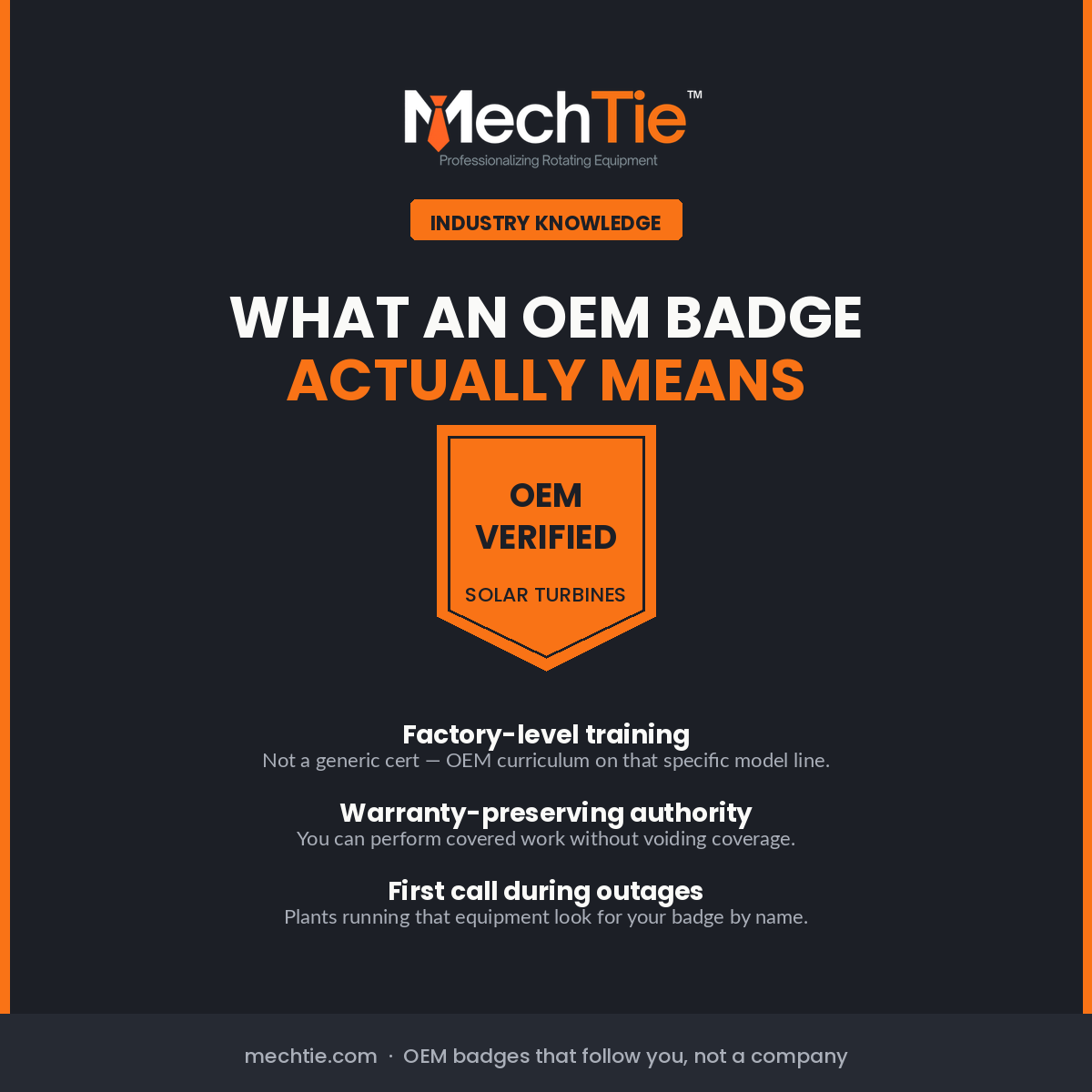
When an OEM like Solar Turbines, Siemens Energy, GE Vernova, or Atlas Copco puts their authorization on your resume, they're saying three specific things:
You completed their training
Not a generic cert. Factory-level curriculum on a specific model line. A Solar Centaur 40 authorization means you've done the hands-on at Solar's facility or an approved partner. That's weeks of classroom and wrench time, usually graded, with a practical exam at the end.
You can perform covered work without voiding warranty
This is the real business value. If a plant has warranty-covered equipment and a non-authorized tech does a major inspection, they risk the warranty. An OEM-badged specialist can do the work and preserve coverage. That's why plants ask for it by name.
You're on a short list
Plants running Dresser-Rand reciprocating compressors look for Siemens-authorized techs. Plants with GE Frame 5 turbines look for GE Vernova authorization. When the callouts go out during an outage, the authorized specialists get called first — and get paid accordingly.
The trade-off to understand: OEM training usually ties to a company or dealer network. Historically, if you left the employer that sponsored your training, you lost the badge. That model is changing. More OEMs now recognize individual authorization that travels with the specialist, not the company.
If you've put in the time for OEM training, make sure the badge is listed and verified on your profile — not buried in your resume PDF. It's one of the credentials that actually commands a premium.
Which OEM authorization has opened the most doors for you?
#OEM #RotatingEquipment #Turbomachinery #MechTie #FieldService #GasTurbines