The Skilled Trades Gap by 2030
2.1 million skilled trades jobs are projected to go unfilled by 2030. What that means for rotating equipment specialists, plant operators, and the hiring market.

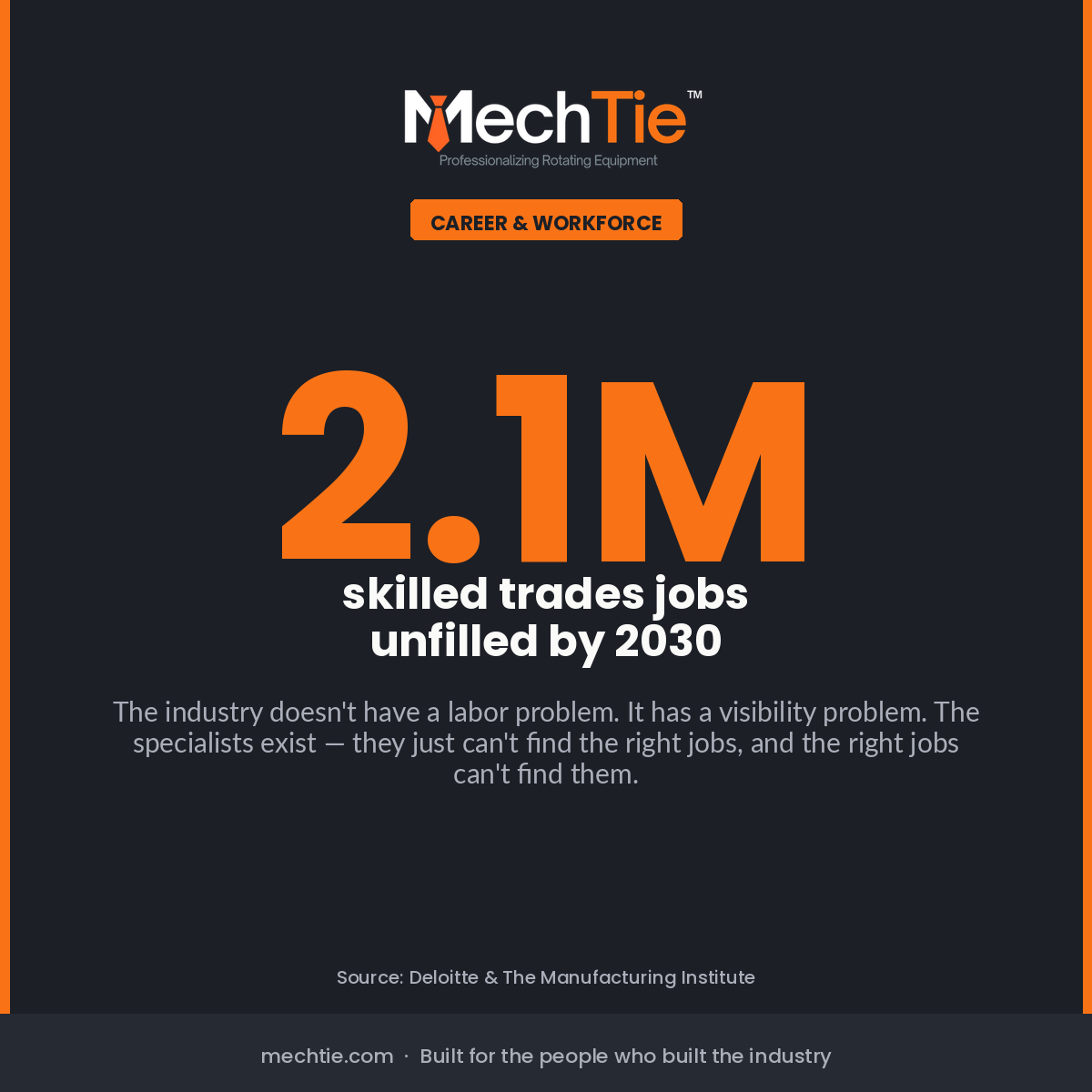
2.1 million skilled trades jobs projected to go unfilled by 2030.
That's the number from Deloitte and The Manufacturing Institute. Every industry conference repeats it. Every workforce report reinforces it. And yet — the specialists who can actually do this work are still underpaid, under-recognized, and spending half their time chasing agencies for the next gig.
Something doesn't add up.
Here's what I've seen: the shortage isn't really a shortage of people. It's a shortage of visibility. There are experienced industrial rotating equipment techs who haven't worked in six months because the jobs they'd crush went to "close enough" hires sourced by agencies that never heard of them. There are millwrights with 25 years on reciprocating compressors who still get called for pump jobs because their expertise isn't findable.
The industry isn't running out of craftsmen. It's running out of ways to connect them to the work that actually needs doing.
That's a solvable problem. Verified profiles. Real equipment history. Peer endorsements from the people who've worked beside you. OEM badges that follow you instead of your last employer. A gate-pass system that proves your credentials at a scan.
The plants that figure out how to find and retain the real specialists — not just warm bodies — are the ones that'll ride out the next decade. The agencies still selling a Rolodex are going to watch their margins compress.
And the specialists who make themselves visible, verified, and reachable? They're going to have more leverage than they've had in a generation.
2.1M jobs is a headline. The real story is what we do about it.
#SkilledTrades #WorkforceDevelopment #OilAndGas #MechTie #RotatingEquipment