Digital Credentials Are Replacing the Paper Trail
Digital credential verification is replacing the paper trail for rotating equipment techs — why plants are demanding it, and what it means for your certifications.

Why digital credential verification is becoming the industry standard
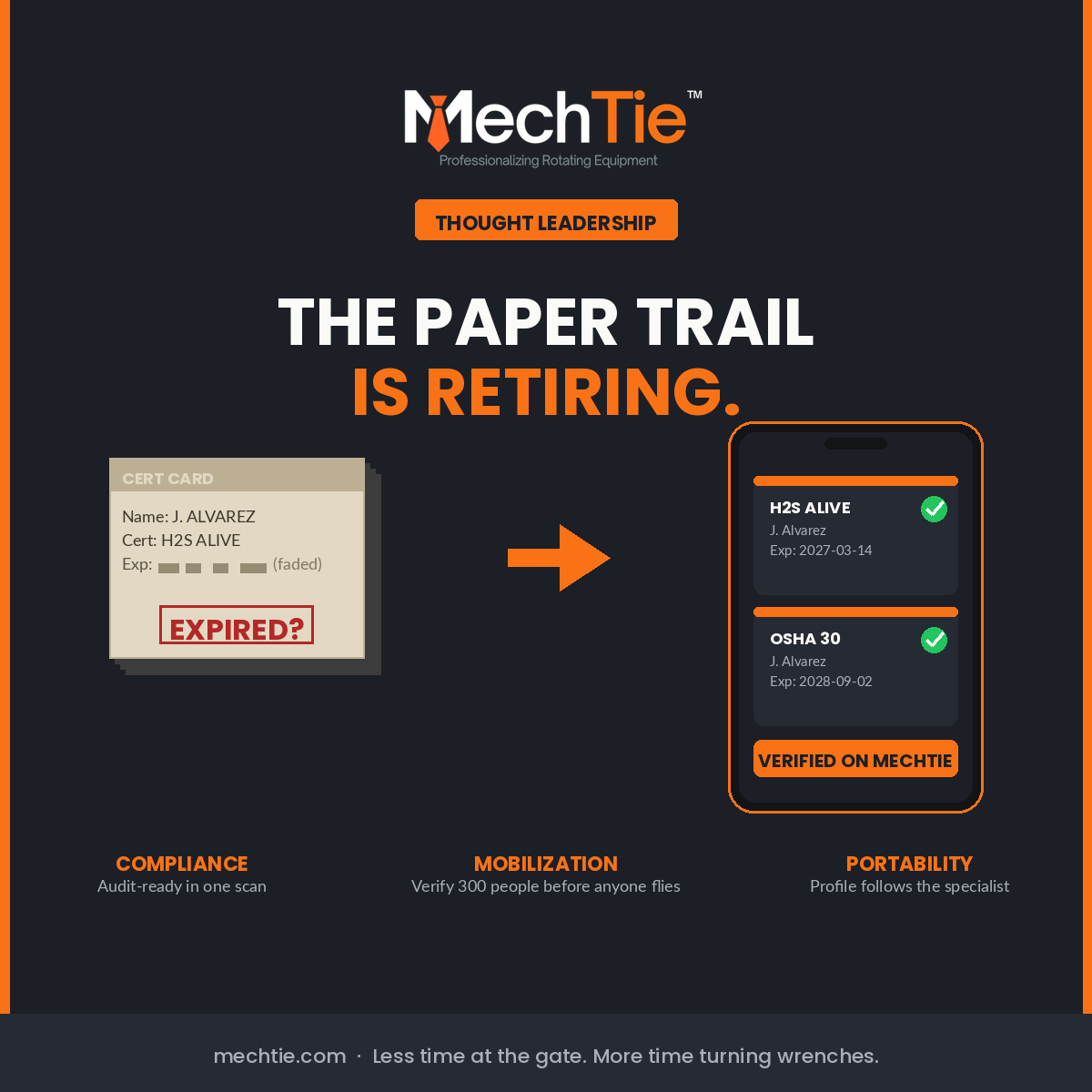
Raise your hand if you've ever shown up to a plant gate with a binder full of cert copies, only to get turned around because one was a photocopy of a photocopy and the safety rep couldn't read the expiration date.
The paper credential system in industrial maintenance is overdue for retirement. Here's why it's finally happening:
Compliance pressure is increasing
OSHA recordkeeping requirements, client-specific HSE standards, and insurance audits all demand verifiable documentation. "I'm pretty sure his H2S is current" doesn't cut it when an auditor is standing in your office.
Turnaround timelines are compressing
When you're mobilizing 300 people for a refinery TAR, you can't afford to spend three days chasing down cert copies by text message. Digital verification lets you confirm an entire crew's qualifications before anyone books a flight.
Specialists want portability
A millwright who holds NCCER certifications, OSHA 30, confined space, and fall protection shouldn't have to re-prove their qualifications every time they move to a new project. A verified digital profile travels with the specialist, not with a manila folder in someone's filing cabinet.
The transition isn't instant — plenty of training providers still hand out paper cards. But the direction is clear. The companies and specialists who move to verified digital credentials now are going to spend a lot less time at the gate and a lot more time turning wrenches.
What's been your experience with digital cert tracking? Smoother than the old way, or still a work in progress?
#DigitalCredentials #WorkforceDevelopment #MechTie #IndustrialMaintenance #SkilledTrades